
Drywall Hole Patching in Gilbert, AZ: Picture Hanger and Cut-Out Patch Restoration
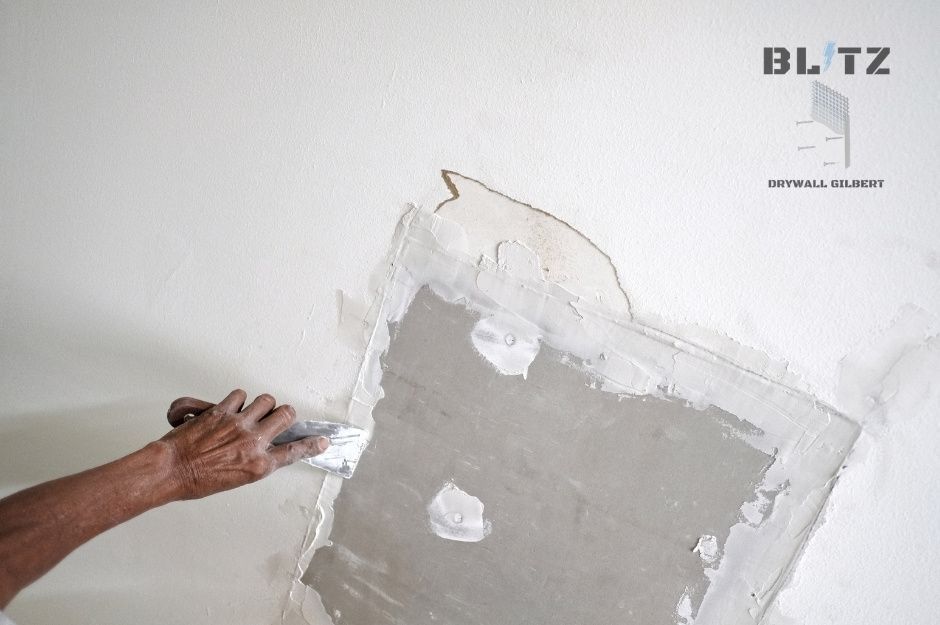
Blitz Drywall Gilbert provides professional drywall hole patching in Gilbert, Arizona, for residential and commercial properties dealing with dents, punctures, cut-outs, and wall damage. From small anchor holes to larger impact damage, we restore drywall so repairs blend cleanly with the surrounding surface.
Drywall patching done right takes more than filler and paint. Weak edges need to be cut clean, backing added where required, and each coat of compound feathered smooth before sanding and texture matching. With 18 years of experience, we use proven repair methods, quality materials, and experienced hand smoothing to deliver durable results that don’t stand out under normal lighting.
If you need reliable hole patching for damaged drywall, call us at 480-637-3922 today. You can also fill out our online form to request service and get a quote for your repair.
Professional Drywall Hole Patching Services
Our team handles the full range of drywall hole patching work, from small punctures to large panel replacements, across both residential and commercial properties. Our 18 years of experience means we approach each repair with the right method for the specific damage type.
Blitz Drywall Gilbert

Residential Drywall Patch Repair Solutions
Residential drywall damage happens in predictable ways. Doorknob impacts, screw anchor removals, picture hanger holes, and accidental punctures are among the most common issues we fix in Gilbert homes.
For small hole drywall repair, typically under 6 inches, we use mesh patch kits or California patches depending on the wall surface. Large hole drywall repair requires cutting back to the nearest studs and securing a backing board before fitting a new drywall section.
We match existing wall texture precisely, whether that's knockdown, orange peel, or smooth surface. The goal is a repair that blends in rather than stands out.
| Damage Type | Common Cause | Repair Method |
|---|---|---|
| Small punctures | Doorknobs, anchors, hangers | Mesh patch or spackle |
| Medium holes (2–6 in) | Accidental impact | California patch |
| Large holes (6+ in) | Furniture, renovation cutouts | Stud-backed drywall section |
Commercial Drywall Patch Repair Applications
Commercial drywall hole repair comes with tighter timelines and higher traffic conditions than most residential jobs. We work in office spaces, retail units, and multi-unit buildings throughout Gilbert, Arizona.
Drywall panel hole repair and drywall sheet patch repair are frequent in commercial settings where wall damage from equipment, carts, or tenant turnover is common. We assess whether a spot patch or a full panel replacement is the more practical fix.
Our commercial work meets surface-quality standards appropriate for professional environments. We also coordinate scheduling to minimize disruption to business operations.
Small and Large Hole Drywall Patching Methods
The repair method we use depends directly on the hole size and its location on the wall or ceiling.
- Under 1 inch: Lightweight spackle, sanded flush
- 1–6 inches: Mesh patch with joint compound, feathered out
- Over 6 inches: Cut-out patch repair using a backer board or drywall clip system, followed by taping, mudding, and texturing
Drywall cut-out patch repair is necessary when the surrounding drywall is structurally weakened. We don't use a larger patch than the job requires, but we also don't use a smaller one that will fail.
Drywall damage from wear and tear or repair accidents often involves irregular edges. We trim those clean before patching for a better bond and a smoother surface.
In cases where the surrounding drywall remains intact, localized surface patching is often the most efficient repair method.
Surface Patching
Drywall surface patching and drywall spot patch repair address localized damage without replacing entire panels. This is useful when the surrounding drywall is in good condition.
We also handle drywall puncture repair from construction activity, pipe access cuts, and electrical work. Each of these leaves a different edge profile that affects how we prep and complete the patch.
Different types of drywall damage require different repair strategies, especially when hole size, impact force, or surrounding wall condition varies.
Types of Drywall Hole Damage and Common Repair Needs
Drywall holes range from minor surface blemishes to large structural gaps, and each type requires a specific repair method. Knowing the difference helps property owners understand what's involved before calling for professional service.
Causes of Drywall Holes in Residential and Commercial Settings
In residential settings, the most frequent causes of drywall holes include:
- Doorknob impact: drywall doorknob hole repair is one of the most common calls we receive
- Picture hangers and screw anchors: repeated repositioning leaves clusters of small holes
- Accidental bumps and furniture contact: common in hallways and high-traffic rooms
- Renovation cut-outs: electrical, plumbing, and HVAC work leaves clean-edged holes that need patching
Commercial drywall sees different patterns of damage. High-traffic environments like offices, retail spaces, and rental units experience wall impact damage from equipment, carts, and general wear and tear. Drywall repair accidents during tenant buildouts are also a consistent source of panel damage in commercial properties.
Understanding Wall Impact and Accidental Damage
Wall impact damage often looks worse than it is, but it can also hide issues that aren't immediately visible. A hard strike to drywall can crack the surface paper, crush the gypsum core, or create a puncture with ragged edges, all of which affect how the repair is approached.
Drywall repair from accidents sometimes involves damage to adjacent areas. A single doorknob strike, for example, can crack outward from the main hole. We assess the full extent of damage before beginning any drywall surface patching.
Drywall cracks radiating from a hole are common and need to be addressed as part of the same repair. Ignoring them leads to visible lines reappearing through fresh paint.
Recognizing When Professional Repair Is Required
Not every hole needs a professional, but several conditions do:
- Holes larger than 6 inches where structural backing is needed
- Water-damaged drywall surrounding the hole, which compromises the repair
- Multiple holes or widespread drywall damage across a wall or ceiling
- Commercial drywall that must meet surface standards for inspection or tenant handover
We've handled every variation of residential drywall and commercial drywall hole repair in Gilbert, Arizona. Attempting complex repairs without the right tools or technique typically results in visible patches, uneven texture, or repairs that fail within months.
The Hole Patching and Surface Restoration Process
At Blitz Drywall Gilbert, patching a hole correctly involves more than just filling a gap; it requires proper assessment, the right materials, matched texture, and a primed, painted surface that blends into the surrounding wall.
Initial Damage Assessment
Before any patching begins, we inspect the hole or damaged area closely. The size, depth, and location of the damage all affect the repair approach.
We assess whether the surrounding drywall is structurally sound or if there is additional hidden damage, for example, water damage behind the wall or weakened edges around an impact zone. A doorknob hole through a hollow-core section requires a different fix than a screw anchor hole or a cut-out left from electrical work.
Patching Materials and Techniques
The patching method depends on the hole size:
- Small holes (screws, picture hangers): Spackling compound or setting-type joint compound
- Medium holes (anchors, minor impacts): Mesh patch or California patch method
- Large holes (doorknob, cut-outs, panel damage): Drywall backer board with a new drywall panel section
For drywall panel hole repair and drywall cut-out patch repair, we cut the damaged area into a clean shape, secure backing supports, and fasten a replacement piece of drywall. Joint compound is then applied in multiple coats, with each coat feathered outward to blend into the existing wall surface.
We use professional-grade materials on every job, the same materials used in new drywall placement, because they hold better and sand more cleanly than store-bought patch kits.
Texture Matching, Priming, and Painting
Texture matching is one of the most skill-dependent parts of drywall hole repair work. Once the patched area is sanded smooth and the correct texture is applied, we apply a coat of drywall primer. Primer seals the compound and ensures the paint absorbs evenly, which prevents the patch from showing through as a dull spot.
Paint is then applied to match the existing wall color. We blend the painted area into the surrounding surface rather than painting just the patched spot.
Ensuring Seamless and Durable Results
A completed drywall spot patch repair should be invisible. We use feathering techniques during the mudding stage to eliminate visible edges, and we sand between each compound coat for a flat, uniform surface.
Durability matters just as much as appearance. We use setting-type compounds where appropriate because they shrink less than air-dry compounds, reducing the chance of cracking over time.
Every repair we complete, whether it's a minor drywall picture hanger hole repair or a full drywall sheet patch repair, is held to the same standard we apply to professional drywall repair and full drywall restoration work.
Why Choose Blitz Drywall Gilbert for Drywall Hole Patching
Blitz Drywall Gilbert brings 18 years of hands-on experience to every job, whether it's a small screw anchor hole or a large panel replacement. We handle both residential and commercial drywall hole patching across Gilbert, Arizona, with a focus on lasting results.
Drywall patching looks simple but requires the right technique to achieve a seamless result. Poor repairs stand out clearly once paint is applied, especially under direct lighting.
Our team is trained to handle every type of hole repair. Every repair is done to match your existing wall surface as closely as possible.
If you need reliable hole patching in your drywall, call us at 480-637-3922 to speak with a drywall repair specialist, or fill out our online form and get a free quote.